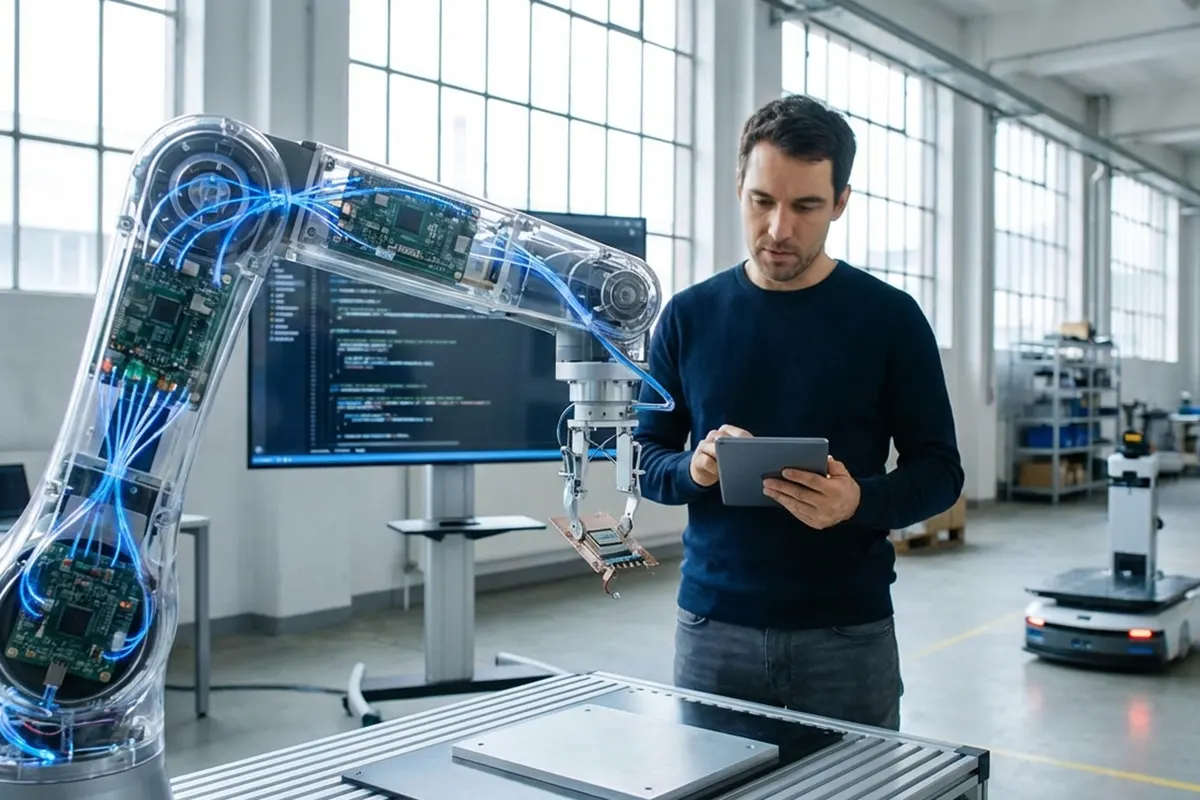
How Robotics is Changing Industries
Robotics has become a driving force behind modern industrial transformation. From factory floors to hospitals and warehouses, robots are reshaping how work is done by improving efficiency, precision, and productivity. In 2026, robotics is no longer limited to repetitive tasks—it is now integrated with artificial intelligence, machine learning, and advanced sensors to perform complex operations.
As industries continue to adopt automation, understanding the role of robotics is essential for businesses and professionals who want to stay competitive in a rapidly evolving world.
What is Robotics?
Robotics is a branch of technology that involves the design, development, and use of machines (robots) to perform tasks automatically or semi-automatically. These machines can be programmed to carry out specific actions with minimal human intervention.
Modern robots are equipped with:
- Sensors for environmental awareness
- AI for decision-making
- Actuators for movement and control
This combination allows robots to perform tasks with high accuracy and consistency.
The Rise of Robotics in Modern Industries
The adoption of robotics has increased significantly over the past decade. Businesses are investing in automation to reduce costs, improve productivity, and enhance quality.
Key factors driving this growth include:
- Advances in artificial intelligence
- Demand for faster production
- Labor shortages in certain industries
- Need for higher precision and safety
Robotics is now a core component of digital transformation strategies worldwide.
1. Robotics in Manufacturing
Manufacturing is one of the earliest and most significant adopters of robotics.
Key Applications
- Assembly line automation
- Welding and painting
- Quality inspection
- Packaging and sorting
Robots in manufacturing can work continuously without fatigue, ensuring consistent output and reducing errors. This leads to increased efficiency and lower production costs.
Impact
- Faster production cycles
- Improved product quality
- Reduced workplace injuries
2. Robotics in Healthcare
Robotics is revolutionizing healthcare by improving patient outcomes and supporting medical professionals.
Key Applications
- Robotic surgery systems
- Rehabilitation robots
- Hospital automation
- AI-powered diagnostics
Robotic-assisted surgeries allow for greater precision, smaller incisions, and faster recovery times.
Impact
- Enhanced surgical accuracy
- Reduced human error
- Better patient care
3. Robotics in Logistics and Warehousing
The logistics industry has experienced massive transformation due to robotics.
Key Applications
- Automated warehouses
- Inventory management
- Sorting and packaging
- Delivery robots and drones
Robots can quickly move goods, track inventory, and optimize supply chain operations.
Impact
- Faster order fulfillment
- Reduced operational costs
- Improved efficiency
4. Robotics in Agriculture
Agriculture is becoming smarter with the use of robotics and automation.
Key Applications
- Autonomous tractors
- Crop monitoring drones
- Robotic harvesting
- Precision farming
These technologies help farmers increase yield while reducing resource usage.
Impact
- Higher productivity
- Reduced labor dependency
- Sustainable farming practices
5. Robotics in Retail and Customer Service
Retail businesses are using robotics to enhance customer experience and streamline operations.
Key Applications
- Automated checkout systems
- Customer service robots
- Inventory tracking
- Warehouse automation
Robots can assist customers, answer questions, and manage stock efficiently.
Impact
- Improved customer satisfaction
- Faster service
- Reduced operational costs
6. Robotics in Construction
The construction industry is adopting robotics to improve safety and efficiency.
Key Applications
- Brick-laying robots
- 3D printing of buildings
- Site inspection drones
- Demolition robots
Robotics helps complete projects faster while reducing risks for workers.
Impact
- Increased safety
- Faster project completion
- Lower labor costs
Benefits of Robotics Across Industries
Robotics offers several advantages that make it essential for modern industries.
Major Benefits
- Increased productivity and efficiency
- High precision and accuracy
- Reduced human error
- Improved workplace safety
- Cost savings in the long run
Robots can perform tasks that are dangerous, repetitive, or physically demanding, allowing humans to focus on more strategic roles.
Challenges of Robotics Adoption
Despite its benefits, robotics also presents certain challenges.
Key Challenges
- High initial investment
- Job displacement concerns
- Technical complexity
- Maintenance and upgrades
- Ethical considerations
Businesses must carefully plan their automation strategies to balance costs and benefits.
Robotics and the Future of Work
Robotics is reshaping the workforce by changing the nature of jobs.
Key Changes
- Decline in repetitive manual jobs
- Growth in technical and AI-related roles
- Need for upskilling and reskilling
While some jobs may be replaced, robotics also creates new opportunities in engineering, programming, and system management.
Future Trends in Robotics
The future of robotics is filled with innovation and possibilities.
Emerging Trends
- Collaborative robots (cobots) working alongside humans
- AI-powered autonomous systems
- Robotics in space exploration
- Human-like robots with advanced interaction capabilities
As technology advances, robots will become more intelligent, adaptable, and integrated into everyday life.
Conclusion
Robotics is transforming industries by improving efficiency, accuracy, and productivity. From manufacturing and healthcare to agriculture and logistics, robots are playing a crucial role in shaping the future of work and business.
While challenges such as cost and job displacement exist, the benefits of robotics far outweigh the drawbacks. Businesses that embrace robotics and invest in innovation will be better positioned to succeed in the modern industrial landscape.
The future is not about robots replacing humans—it is about humans and robots working together to create a smarter and more efficient world.
FAQs
1. What industries use robotics the most?
Manufacturing, healthcare, logistics, agriculture, and construction are the top industries using robotics.
2. How does robotics improve efficiency?
Robots can work continuously, perform tasks faster, and reduce errors, leading to higher productivity.
3. Will robots replace human workers?
Robots may replace some repetitive jobs but will also create new opportunities in technical fields.
4. What are collaborative robots (cobots)?
Cobots are robots designed to work alongside humans safely and efficiently.
5. What is the future of robotics?
The future includes AI-powered robots, automation across industries, and increased human-robot collaboration.